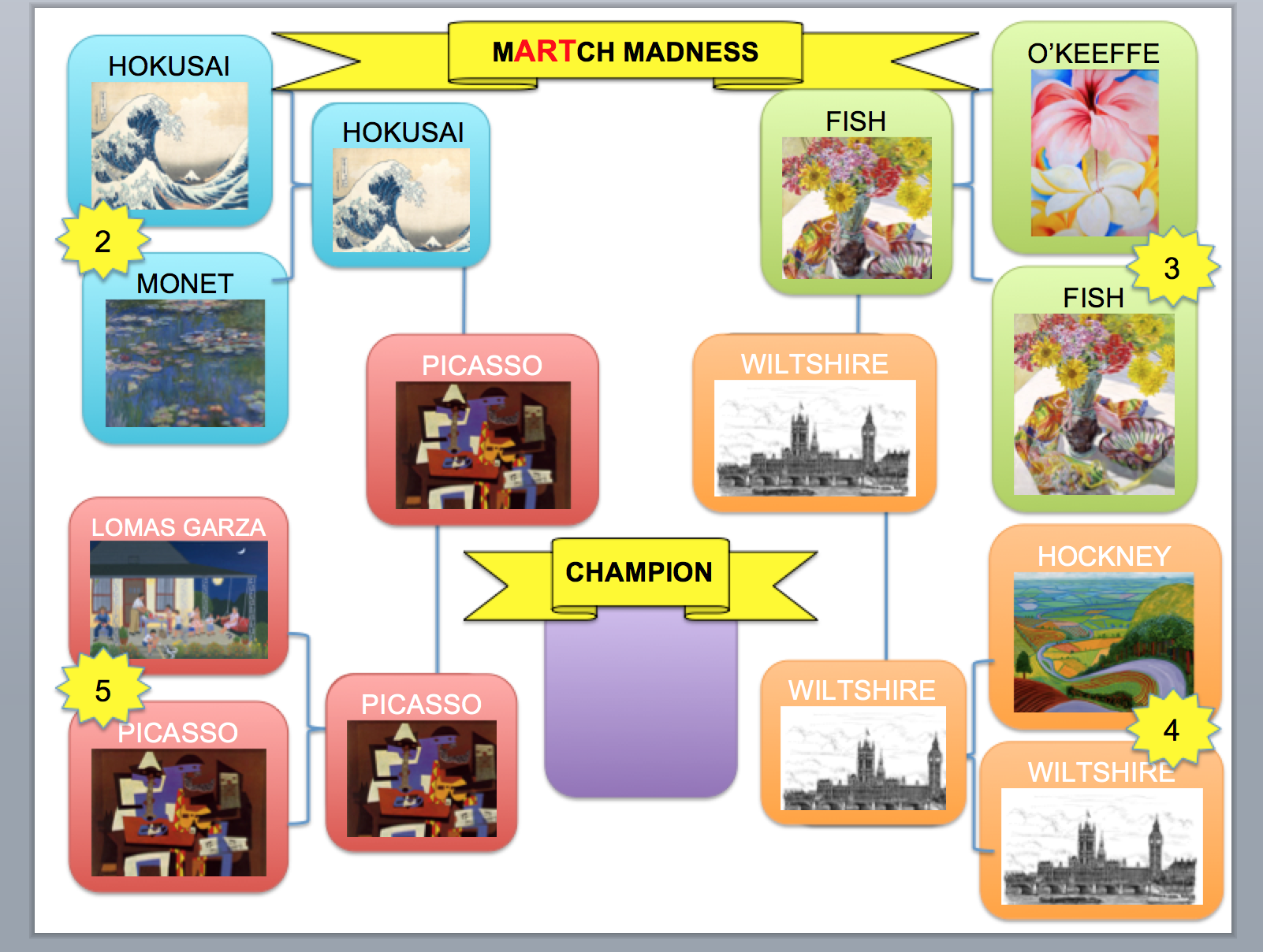
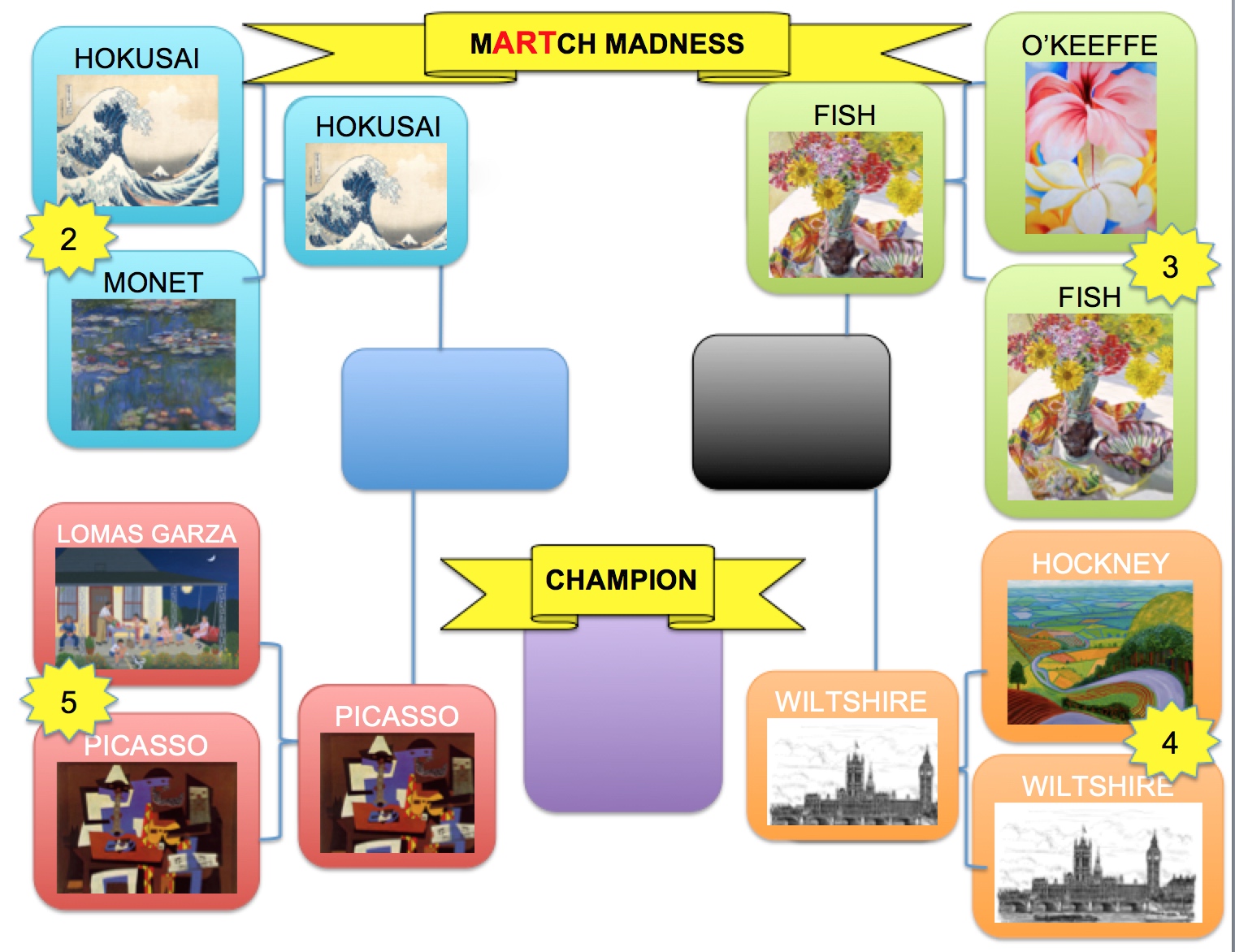
We have a CHAMPION! Congratulations to the 4th grade! They have won the mARTch Madness bracket! Their artist, Stephen Wiltshire, has earned more votes than any other artist we studied.
As an award they will get to paint Thunder white. Why white? To prepare him for the annual Spirit Week KPREP kickoff! (Of course, this is not Thunder!)
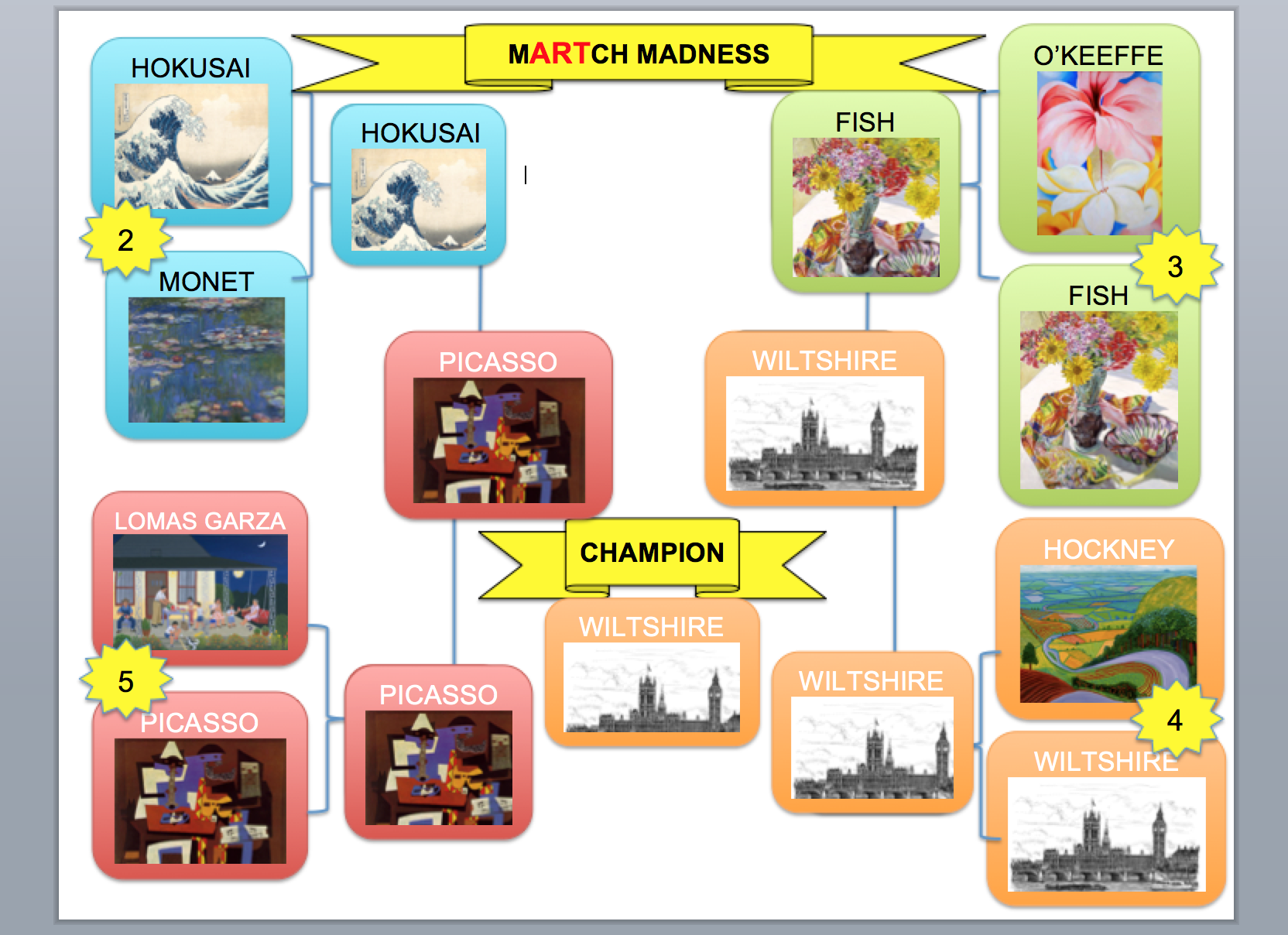
This March, the art room is celebrating a different kind of March Madness. Second through fifth grade classes participated in mARTch Madness during art classes. It’s down to 5th grade’s Picasso and 4th grade’s Wiltshire! WHO WILL BE OUR CHAMPION?
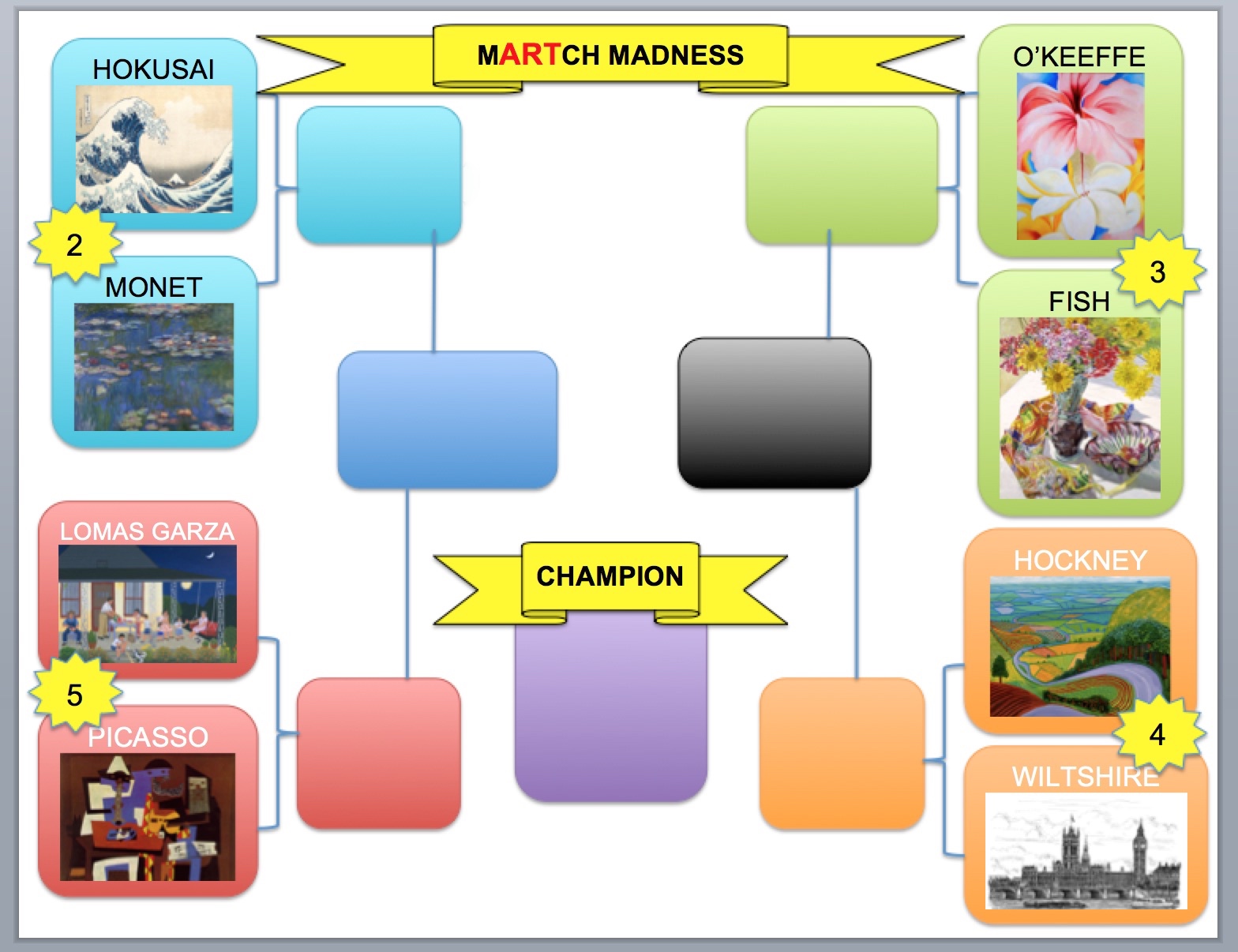
The 4th and 5th grade classes will learn a little about each artist and artwork and then…vote! Who will be voted off the bracket next? To learn more about the artists, check out this post.
This March, the art room is celebrating a different kind of March Madness. Second through fifth grade classes will participate in mARTch Madness during art classes. Who did your grade vote to represent you in the Final Four?
In class, you’ll learn a little about each artist and artwork and then…vote! Who will be voted off the bracket next? To learn more about the artists, check out this post.
This March, the art room is celebrating a different kind of March Madness. Second through fifth grade classes will participate in mARTch Madness during art classes. Check out which two artists your grade will vote on. In class, you’ll learn a little about each artist and artwork and then…vote!
Do you recognize these artists or artworks?
Will your favorite artist conquer all the others?
We love Monet, but will Picasso win it all? Does Wiltshire stand a chance?
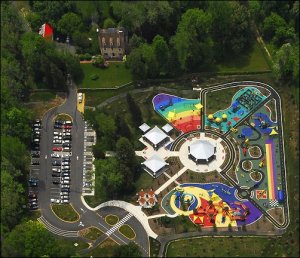
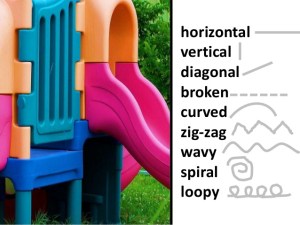
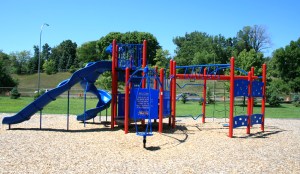
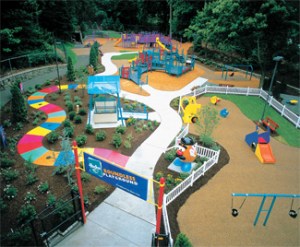
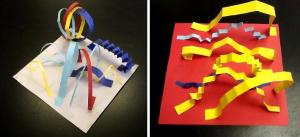
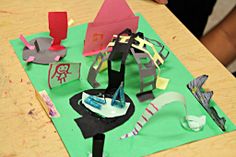
The second grade will be learning the differences between 2-D and 3-D. 2-D (2 dimensional) is flat and can only be measured two ways (height, width). 3-D (3 dimensional) is not flat and can be measure three ways (height, width, depth). Students will use 2-D papers to create a 3-D sculpture of a play park. We’ll use many types of lines to create different types of playground equipment. There’s a lot of exploration and experimentation in this project! What would people would want to have in a fun and safe play park?
Career week is coming up and the art room is getting ready for our next project, which combines art, career studies, and the International Book Project!
All K-5 students will create one career/college-themed bookmark to keep and another to donate to the International Book Project. All year, Simmons has been collecting books for the IBP and we’re going to donate bookmarks to go along with our book donations.
Check out what the International Book Project does! We’re going to each donate one bookmark to IBP. Think about what design you’d like to make on your donation bookmark.
For your second bookmark, you’ll create a bookmark to keep and take home. This bookmark will have a college/career theme. Which careers are you interested in? Which colleges would you like to attend? Why?
Of course, you could always check out the colleges that are near and dear to my heart!
One of my favorite things about Wooster is the bagpipers, always the bagpipers.
Wait, why does my college have bagpipers? Why do they wear kilts? What’s up with all the plaid? Why did I go to school in a place called Wooster (pronounced Wuster, not Wooooooster)? You can ask me or check out www.wooster.edu to find out more!
While we’re on the topic of music…my other alma mater has a band, too.
OSU is a great university with excellent academic opportunities and fun traditions, like this. I loved my time there. What’s a buckeye? Why is “dotting the i” such a big deal? Who is John Glenn? You can ask me or check out www.osu.edu to find out more!
All grades (preK-5) will be creating artworks for the PTA’s Art to Remember fundraiser. Art to Remember provides families with an easy way to have their students’ artwork turned into some pretty cool items, such as iPhone covers. If you love your students’ artworks and want to take them with you everywhere, you are in luck, that is exactly what Art to Remember helps you do!
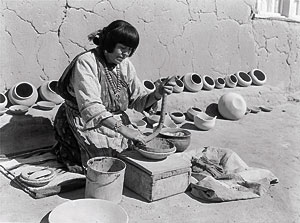
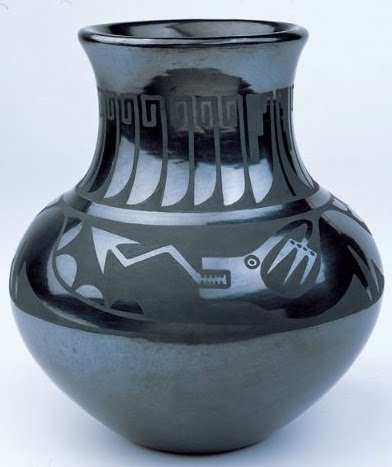
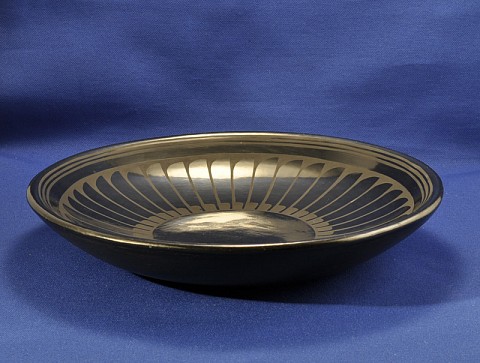
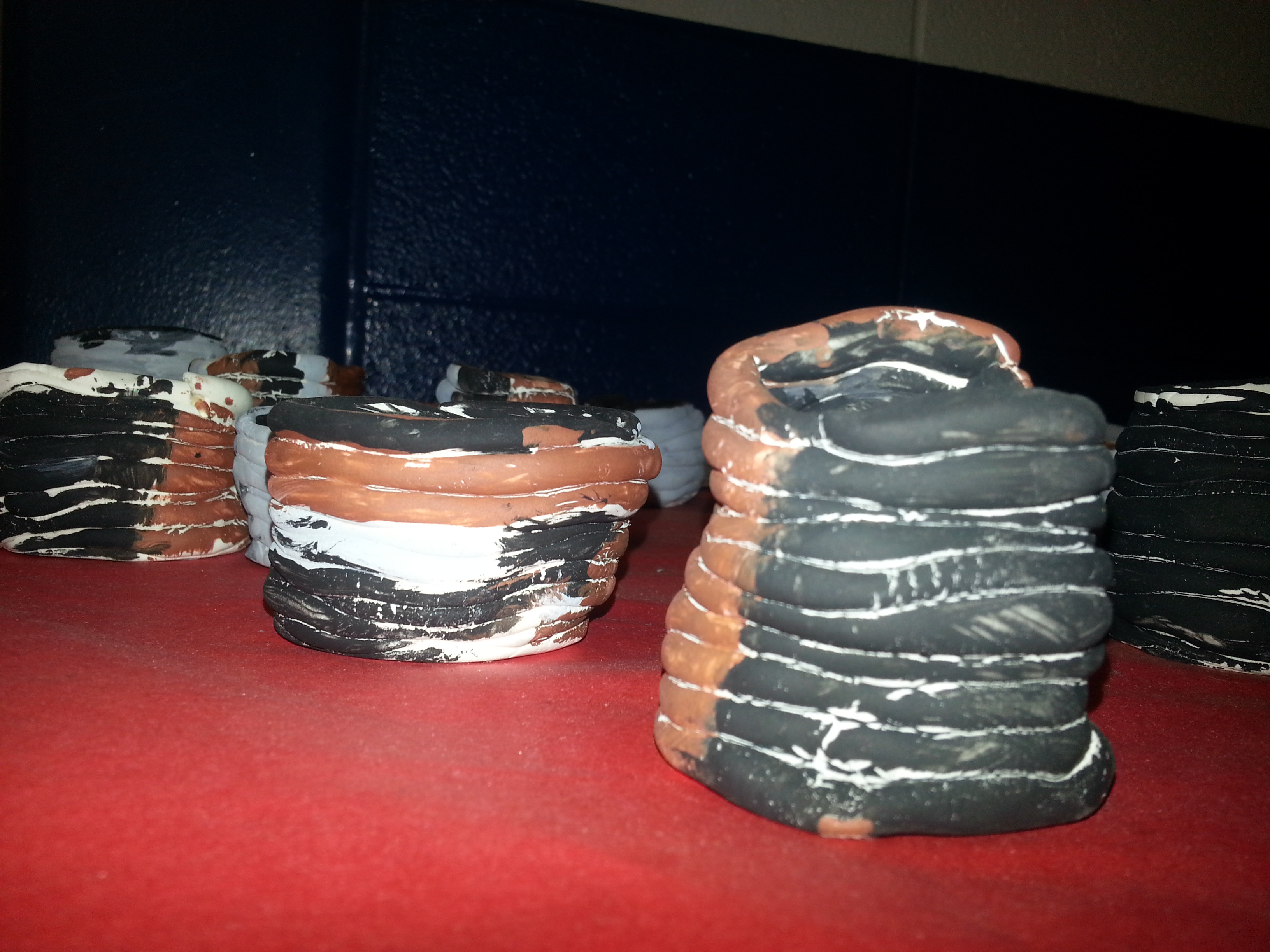
The second grade will learn how to create coil pots like Maria Martinez. She was a Pueblo Native American, who used traditional techniques to make Pueblo pottery. Maria’s pottery is functional, which means it can be used. What do these pieces of pottery look like they were used for?
Here’s more information on Maria and how important her artworks were to potters everywhere.
Here’s how to make a coil pot like Maria Martinez:
Day 1: Follow these steps to practice making coil pottery with modeling clay. Think of what shape your pottery needs to be to do a special job, like a vase or bowl. Save some extra clay if you need a handle, lid, or spout.
Day 2: Follow these steps to make coil pottery with the white, Model Magic clay. Don’t forget to think of what shape your pottery should be.
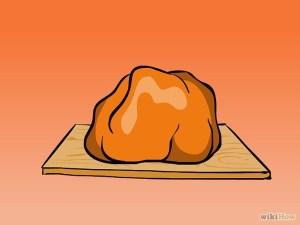
Step 1: Clay
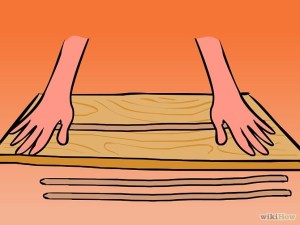
Step 2: Roll clay into coils
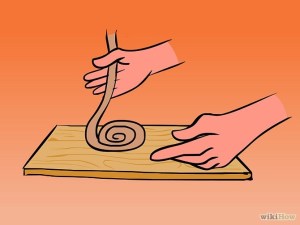
Step 3: Form base of pot
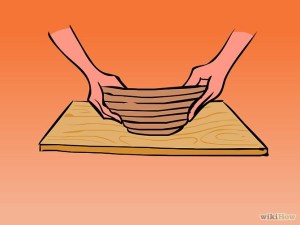
Step 4: Shape pottery
Day 3: Place pottery on scrap paper. Draw patterns, with pencils, on your pottery and paint it. Don’t forget the inside! Don’t paint over your name or class. Keep pottery on scrap paper so it can dry.
We did it! Gifted art students worked collaboratively to paint this banner. The banner will represent Woodford County at the 2015 KY School Boards Association Conference. Simmons was asked to do the honor this year, and we were very successful. Students chose to work on the banner, and most of them even used RECESS time to do it!Thank you to all the teachers who were flexible with their students so that we could have this wonderful opportunity.
The theme for this year’s conference is “The Courage to Lead,” so we did a “school” of fish with a colorful leader. Get it? School of fish? We thought it was clever!
The second grade is learning that people all around the world have used beads for trade. A person would give a bead and receive something in return. Beads that are used like this are called trade beads. Sometimes, people traded beads to show friendship. Have you ever given a friend a gift?
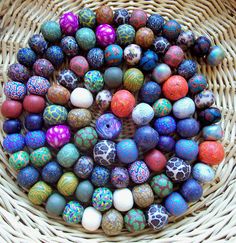
Artists still make tradebeads from many materials, like glass, paper, and clay. What materials, or media, were used to make these beads?
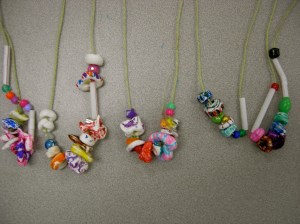
We will make trade beads out of clay, paint them, trade them with friends, and make necklaces.
Learn more about how glass beads are made all around the world:
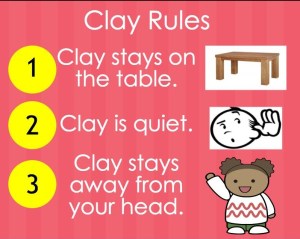
Follow these rules.
Student artwork
Your turn…Steps:
1) You will need half of a packet of Model Magic.
2) Follow these steps to make your beads. Your clay will be all white. Make sure the hole is big enough for yarn. (These holes would be too small!) The hole will shrink a little when it dries. Make AT LEAST 10 beads, try new shapes. Make one bead just for your teacher (shh…it’s a surprise!).
babbledabbledo.com
3) Gently place your beads in the egg carton. Make sure they are in the spots with your name. Let your beads dry, go help a friend!
4) Once beads are dry, gently take them out of the egg carton. Place them on your scrap paper.
5) Use markers to color your beads- your hands will get messy, it’s okay! Use the scrap paper to keep the table from getting messy.
6) Trade three beads with three different people. Give me your bead for your homeroom teacher, I will make the surprise necklace.
7) String your beads onto your yarn. Tie a knot. Wear your necklace. Be careful, the colors will come off if your bead gets wet!











 Ms. Baird's Art Class
